The DJGG World Language and Business Challenge Competition
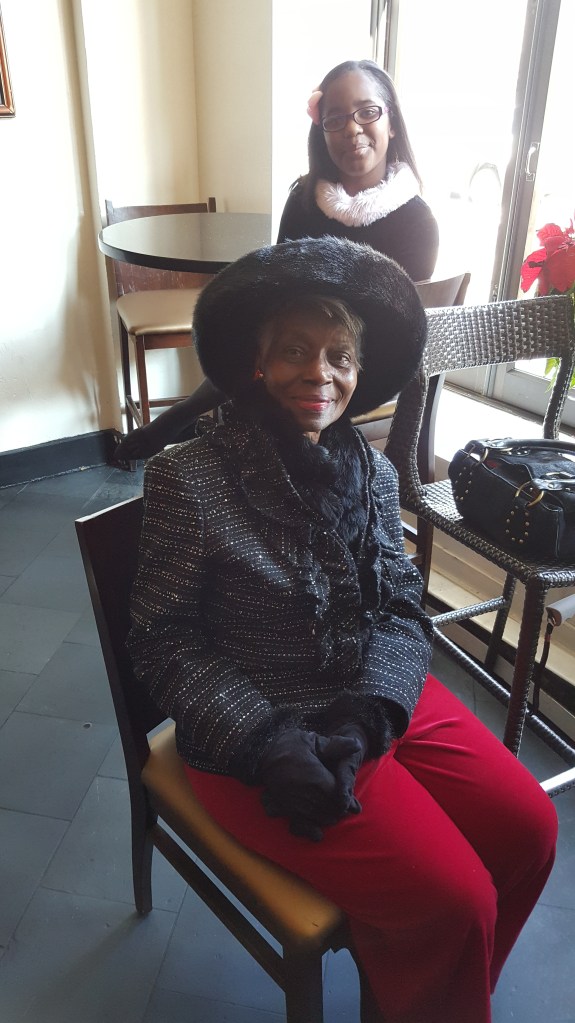
The Dorothy Jean Goins Graham (DJGG) World Language and Business Challenge (WLABC) is a yearly competition which has as objective to promote language, geography, and business knowledge in youths ages 9 through 17, particularly in economically disadvantaged communities.
The challenge consists of two competitions held on the same day.
The Language Challenge (morning)
and
The Business Challenge (afternoon).
Teams compete in these competitions at the city and state levels and the winner passes to the next stage of competition held in New York City (North American Finals). If they are the winners there, they then pass to compete in the International Finals which are held in Dubai, United Arab Emirates (UAE) or Doha, Qatar (on alternating years) where they compete against teams from around the world.
The challenges promote and test the contestant’s knowledge in two areas:
The Language Challenge tests the understanding of world languages (with particular emphasis given to languages outside of the traditionally taught Western European Languages taught in US schools ie, Spanish, French, Italian) and the geography and geopolitical topics associated with these languages. For example, languages such as Hindi, Arabic, Swahili, Mandarin Chinese, Icelandic, and Korean, are a few of the languages that are touched on (but are not limited to) in the competition.
The second challenge, The Business Challenge, tests the contestant’s knowledge of world financial matters. Here, the emphasis is on testing contestants understanding of principles of financial equities markets (primarily stock market) and currency markets, again with a geography and geopolitical slant.
Genesis of the concept
In 2004, Mrs. Dorothy Jean Goins Graham (DJGG), having become a widow following the passing of her husband, the late Dr. Horace Graham in October of that year, set out to surround herself with things to do. Before the passing of her husband, they would travel extensively each year, using a Marriott timeshare which they owned to visit new places. Now, however, the large timeshare apartment would be empty if visited/used alone.
Mrs Dorothy, a language instructor by profession, had created a few years earlier, The Centro Tutoria del Oeste (Western Puerto Rico Tutoring Center), a learning organization created to teach young children English and/or Spanish as a second language. During this time, and through this experience, she found that if children, particularly those from economically disadvantaged areas and difficult family situations, were taken out of their day-to-day surroundings and immersed in interesting language and business settings, the learning of these topics was accelerated, and the students would become much more engaged than if teaching took place at the same place in which they lived. That is, the learning would become an adventure, an escape and the students would enjoy it much more, which in turn translated into accelerated learning and increased retention of the learned material. There was also a strong desire for the children to further their learning in these fields once they returned home.
Given this fact, Mrs Dorothy put forward the idea of taking 7 children (5 girls (ages 9, 11, 13, 15, 17) and 2 boys (ages 10 and 12) from their homes in economically disadvantaged cities in the South of the United States to visit her at a Timeshare Exchange property in Puerto Rico. She used her large, now underutilized Timeshare, to host the children and teach them Bible school concepts, Language School, and Business principles, all in an environment far away from the hardships that they lived in back home. The idea worked – the children returned home with a renewed interest and outlook on these newly acquired skills and on life in general. Mrs Dorothy thus went about seeking a way of formalizing her methodology and growing her concept.





 djggwlabcfoundation